

Ozempatch: Do Herbal Weight Loss Patches Actually Work? 2026 Consumer Analysis as GLP-1 Patch Ads Surge During Resolution Season
Industry report addresses OzemPatches ingredient disclosures, transdermal delivery claims, and what ad-exposed consumers should verify before purchase decisions
NEW YORK, Dec. 29, 2025 (GLOBE NEWSWIRE) -- Disclaimer: This article is for informational purposes only and is not medical advice. Always consult a qualified healthcare professional before starting any weight-management program, supplement, or topical wellness product. This article contains affiliate links. If you purchase through these links, a commission may be earned at no additional cost to you. This compensation does not influence the information presented.
You saw an ad. Maybe it appeared on Facebook while scrolling through holiday photos. Perhaps it interrupted a TikTok video or showed up in your Instagram feed between posts from friends. The ad showed a simple patch, mentioned something about GLP-1 or natural weight loss, and made the whole process look effortless.
You got curious — maybe even hopeful — and then you did exactly what smart consumers do: you searched for more information before spending money.
That skepticism is healthy. This consumer analysis is for you.
As January 2026 approaches and New Year resolution season drives heightened interest in weight management products, advertising for herbal wellness patches has increased significantly across digital platforms. This report examines what these products actually are, what evidence exists for their claimed benefits, and how consumers can evaluate options in this category.
You can access additional product details on the official website to verify current information. Readers seeking additional context on the herbal wellness patch category may find value in this related industry analysis examining consumer search patterns and product transparency.
Why Weight Loss Patch Searches Spike Every January
Search data patterns reveal predictable annual increases in weight management queries beginning in late December and peaking in early January. This timing aligns with post-holiday reflection, New Year resolution setting, and increased advertising spend by wellness product companies targeting motivated consumers.
The convergence of consumer motivation and advertising saturation creates an environment where careful evaluation becomes particularly important. Consumers encountering weight loss patch advertisements during this period often search for validation before purchase, asking questions like:
Do these patches actually work? Are they legitimate or another gimmick? What do they contain? How do they compare to prescription options? Is this too good to be true?
These questions deserve straightforward answers based on available evidence rather than marketing language.
What "Weight Loss Patches" and "GLP-1 Patches" Actually Means
Understanding terminology is essential for setting appropriate expectations.
The Marketing Language:
Products advertised as "weight loss patches" or "GLP-1 patches" are typically herbal wellness products containing botanical ingredients delivered through transdermal (through-the-skin) application. It is important to note that the term "GLP-1 patch" as used in consumer advertising is marketing terminology, not a verified mechanism classification. This terminology often references prescription GLP-1 medications to capitalize on consumer awareness of those pharmaceutical products.
The Medical Reality:
GLP-1 (glucagon-like peptide-1) is a hormone naturally produced in the gut that influences appetite and blood sugar regulation. Pharmaceutical GLP-1 receptor agonists like semaglutide (Ozempic, Wegovy) and tirzepatide (Mounjaro, Zepbound) are prescription medications that have demonstrated significant effects in extensive clinical trials.
The Critical Distinction:
Herbal wellness patches marketed using "GLP-1" terminology do not contain pharmaceutical GLP-1 receptor agonists. They contain botanical ingredients. The "GLP-1" language reflects marketing positioning and consumer search trends, not product composition or verified mechanism of action.
According to regulatory guidance, there are no FDA-approved GLP-1 patches. Products applied to the skin rather than ingested also do not meet the FDA's regulatory definition of dietary supplements, placing herbal wellness patches in a distinct category with different oversight than both pharmaceutical drugs and oral supplements.
Do Transdermal Herbal Patches Work for Weight Management?
This is the central question most consumers are asking. The honest answer requires examining available evidence.
What Evidence Exists:
Transdermal delivery systems can effectively deliver certain compounds through the skin into the bloodstream. This technology is well-established for specific pharmaceutical applications, including nicotine patches and certain hormone therapies.
Some botanical ingredients commonly associated with metabolic support, such as berberine, have published research examining their effects. However, the majority of this research has studied oral administration (pills, capsules) rather than transdermal delivery.
What Evidence Does Not Exist:
No published clinical trials were identified demonstrating that transdermal herbal patches produce weight loss, appetite suppression, or metabolic changes in controlled studies. The herbal wellness patch category lacks the clinical trial evidence base of FDA-approved medications.
What This Means Practically:
The gap between marketing claims and clinical evidence is significant in this product category. This does not necessarily mean products have no effect — it means effects have not been demonstrated through rigorous clinical research. Consumers should calibrate expectations accordingly.
Individual testimonials and before-after images in advertising reflect personal experiences presented as marketing materials. These may be influenced by numerous factors including placebo effects, concurrent lifestyle changes, and selection bias. Testimonials do not constitute clinical evidence and should not be used to predict typical results.
How Herbal Patches Differ From Prescription GLP-1 Medications
Consumers searching for "Ozempic alternatives" or "GLP-1 patches" are often comparing across fundamentally different product categories. Understanding these distinctions helps inform decision-making.
FDA-Approved GLP-1 Medications:
Products like Wegovy, Ozempic, Mounjaro, and Zepbound have completed extensive clinical trials demonstrating efficacy and safety. They require prescriptions from licensed healthcare providers. They contain pharmaceutical compounds that interact with specific biological receptors. Cash-pay costs can be substantial, often exceeding $1,000 monthly without insurance coverage.
Herbal Wellness Patches:
Products in this category contain botanical ingredients, not pharmaceutical compounds. They do not require prescriptions. They have not undergone FDA approval processes. Evidence for their claimed effects comes primarily from marketing materials and customer testimonials rather than controlled clinical trials. Price points are typically significantly lower than prescription medications.
The Fundamental Difference:
These categories represent different evidence bases, regulatory oversight levels, mechanism specificity, and reasonable expectations. A herbal wellness patch should not be expected to produce results equivalent to FDA-approved medications, regardless of marketing language suggesting otherwise.
Evaluating Specific Products: OzemPatches as Example
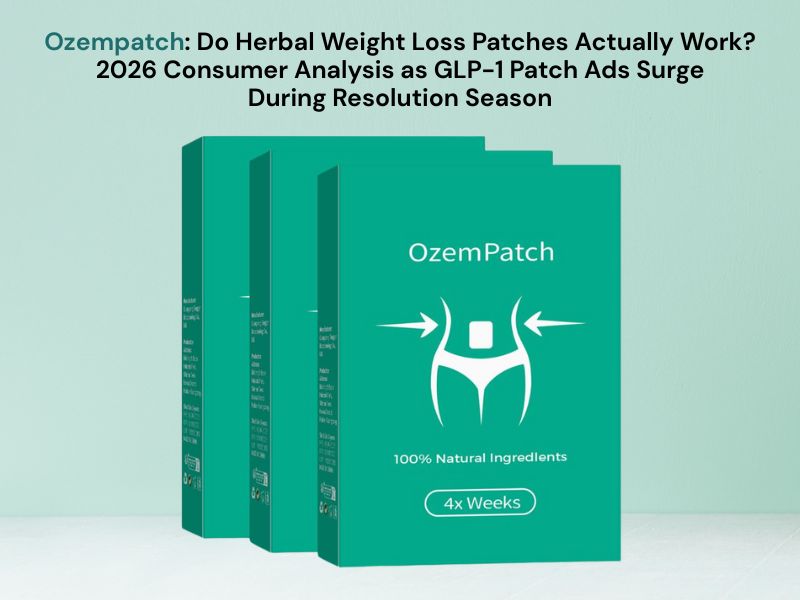
To illustrate how consumers can evaluate products in this category, this analysis examines OzemPatches, one product that has gained visibility through digital advertising.
What the Company Website States:
According to tryozempatch.com, OzemPatches is marketed as a herbal wellness patch designed to provide "soothing warmth" and help "ease tension, heaviness & discomfort." Marketing materials reference "appetite awareness" and "metabolic support."
Displayed Ingredients:
The ingredient list on the product page includes water, glycerin, peony root extract, and mineral oil. These are common cosmetic and topical product ingredients.
Marketing vs. Ingredient List Discrepancy:
The company's promotional materials reference "Natural GLP-1 Support" and mention berberine. However, based on the ingredient list publicly displayed on the company's website at the time of this review, berberine was not listed among the disclosed ingredients. Consumers are encouraged to verify ingredient panels on the physical product packaging or contact the company directly for clarification.
Company Structure:
OzemPatches discloses its corporate structure in published terms. The platform operator is Haur B.V. (Netherlands) and the product seller is STR.VERT CONSULTANTS LTD (Cyprus). According to the company's published refund policy, returns are handled through its European logistics partner, with shipping terms outlined in its official documentation.
What This Example Illustrates:
This product demonstrates patterns common in the category: marketing language that references pharmaceutical terminology, ingredient lists that may differ from marketing emphasis, and corporate structures spanning multiple jurisdictions. These patterns are not unique to any single product.
Readers can access additional product details on the official website to verify current information.
Red Flags and Green Flags: A Consumer Evaluation Framework
Rather than recommending specific products, this framework helps consumers evaluate any product in this category.
Potential Concerns to Investigate:
Marketing claims that imply equivalence to prescription medications without evidence. Ingredient lists that do not match marketing emphasis. Lack of clinical trial data supporting specific claims. Testimonials presented without context about typicality of results. Corporate structures that complicate customer service or returns. Refund policies with significant limitations or costs.
Positive Transparency Indicators:
Clear ingredient lists on product pages. Disclosed corporate structure and contact information. Published refund policies with specific terms. Acknowledgment that products are not FDA-approved medications. Absence of disease treatment claims. Realistic framing of what products may or may not do.
Questions Worth Asking Before Purchase:
What specific ingredients does this product contain, and what evidence exists for transdermal delivery of those ingredients? What does the company claim, and what evidence supports those claims? What is the refund policy, including who pays return shipping and where returns are sent? What would I consider a successful outcome, and is that expectation realistic for this product category? Have I consulted with a healthcare provider about my weight management goals?
Why New Year Resolution Timing Matters
The timing of this analysis — late December 2025 — is intentional. Consumer psychology during resolution season creates both opportunity and vulnerability.
The Motivation Factor:
Post-holiday reflection and fresh-start mentality create genuine motivation for positive change. This motivation is valuable and worth channeling toward approaches likely to produce results.
The Vulnerability Factor:
Heightened motivation combined with advertising saturation can lead to impulse purchases based on hope rather than evidence. Products that might receive more scrutiny at other times may benefit from resolution-season optimism.
The Practical Implication:
Consumers feeling motivated to address weight management goals in January 2026 should channel that motivation thoughtfully. This might include consulting healthcare providers about evidence-based approaches, establishing sustainable lifestyle modifications, and evaluating any products — including herbal wellness patches — with appropriate skepticism regardless of how compelling advertisements appear.
Alternative Approaches Worth Considering
For consumers whose primary goal is weight management, multiple approaches exist with varying evidence bases.
Highest Evidence Base:
Consultation with healthcare providers who can evaluate individual circumstances and discuss FDA-approved options where appropriate. Sustainable dietary modifications developed with qualified nutrition professionals. Physical activity programs appropriate for individual fitness levels and health status.
Moderate Evidence Base:
Certain oral dietary supplements have published research, though results vary across studies and individuals. Behavioral modification programs with professional support. Structured meal planning approaches.
Limited Evidence Base:
Herbal wellness patches and similar products marketed through direct-response advertising. Products making claims not supported by clinical trials. Approaches promising results without lifestyle modification.
The Honest Assessment:
Products with varying levels of clinical evidence are often promoted through different marketing approaches, making it especially important for consumers to understand how evidence standards differ across categories. Recognizing these distinctions can help inform evaluation of available options.
Frequently Asked Questions
I keep seeing ads for weight loss patches. Are they legitimate?
"Legitimate" can mean different things. Many companies selling herbal wellness patches are real businesses selling real products. Whether those products produce the results implied in advertising is a separate question. The evidence base for transdermal herbal patches producing weight loss is limited compared to the marketing claims made for these products.
Is there such a thing as an Ozempic patch?
No. Ozempic is a brand name for semaglutide, a prescription pharmaceutical manufactured by Novo Nordisk. There is no FDA-approved patch containing semaglutide or any GLP-1 receptor agonist. Products using "Ozempic" or "GLP-1" in their marketing are typically herbal wellness products, not pharmaceutical equivalents.
Do any patches work for weight loss?
Transdermal delivery technology works for certain applications, including nicotine cessation and hormone therapy. However, clinical evidence specifically demonstrating weight loss from transdermal herbal patches is limited. Most research on botanical ingredients associated with metabolic support has examined oral administration.
Are weight loss patches safe?
Safety depends on specific ingredients, individual health status, and potential interactions with medications or conditions. The ingredients in many herbal wellness patches (water, glycerin, botanical extracts, mineral oil) have established safety profiles in topical applications. However, consumers with health conditions or taking medications should consult healthcare providers before using any new wellness product.
Should I try a weight loss patch for my New Year resolution?
This analysis cannot make individual recommendations. Consumers should evaluate whether their expectations align with available evidence, whether they have consulted healthcare providers about their goals, and whether they understand the refund policies and limitations of specific products. Resolution-season motivation is valuable — channeling it toward approaches with stronger evidence bases may produce better outcomes.
What should I look for when evaluating these products?
Ingredient transparency, realistic claims, clear refund policies, disclosed corporate information, and absence of language implying equivalence to prescription medications. Skepticism toward dramatic before-after images and testimonials is appropriate given the limitations of anecdotal evidence.
Conclusion: Informed Skepticism as Consumer Protection
The instinct that led you to search for information rather than immediately purchasing deserves validation. In a market saturated with advertising during peak resolution season, that skepticism serves as protection against purchases that may not align with expectations.
This analysis has attempted to provide factual information about what herbal wellness patches are, what evidence exists for their claimed benefits, and how consumers can evaluate products in this category. The goal is informed decision-making rather than persuasion in either direction.
For consumers who choose to try products in this category after this evaluation, maintaining realistic expectations appropriate to the evidence base is essential. For consumers who conclude these products do not align with their goals, exploring evidence-based alternatives with healthcare provider guidance may prove more productive.
Whatever path forward you choose for January 2026, making that choice based on information rather than advertising serves your interests better than impulse purchases driven by resolution-season hope.
Contact Information
According to OzemPatches published website information:
Email: hello@tryozempatch.com
Website: tryozempatch.com
Platform Operator: Haur B.V., John M. Keynesplein 1, 1066EP Amsterdam, Netherlands
Returns Address: Haur B.V., Kleine Esch 669, 2841 MK Moordrecht, Netherlands
Disclaimers
Content Disclaimer: This article is for informational purposes only and does not constitute medical advice, diagnosis, or treatment recommendations. The information reflects publicly available details and general industry analysis. Weight management decisions should be made in consultation with qualified healthcare professionals.
Product Classification Disclaimer: Herbal wellness patches are not FDA-approved drugs or medical devices. Products applied to the skin are not considered dietary supplements under FDA definitions. Products in this category have not been evaluated by the FDA for safety or effectiveness.
Results Disclaimer: Individual experiences with wellness products vary based on numerous factors including physiology, lifestyle, and consistency of use. The herbal wellness patch category lacks clinical trial evidence. No specific results are guaranteed.
Evidence Disclaimer: Statements about limited clinical evidence reflect the absence of identified published clinical trials demonstrating specific effects, not a determination that effects do not exist. Absence of evidence is not evidence of absence, but consumers should calibrate expectations to available evidence.
FTC Affiliate Disclosure: This article contains affiliate links. If a purchase is made through these links, a commission may be earned at no additional cost to the reader. This compensation does not influence the information presented.
Trademark Notice: Ozempic and Wegovy are registered trademarks of Novo Nordisk A/S. Mounjaro and Zepbound are registered trademarks of Eli Lilly and Company. This article is not affiliated with, endorsed by, or sponsored by these companies.
GLP-1 Clarification: Products marketed as "GLP-1 patches" do not contain pharmaceutical GLP-1 receptor agonists such as semaglutide or tirzepatide. The terminology reflects marketing positioning and consumer search behavior, not verified biological mechanism.
Consumer analysis based on publicly available information and industry sources observed in December 2025. Product information and market conditions are subject to change.
CONTACT: hello@tryozempatch.com

Email: hello@tryozempatch.com

Legal Disclaimer:
EIN Presswire provides this news content "as is" without warranty of any kind. We do not accept any responsibility or liability for the accuracy, content, images, videos, licenses, completeness, legality, or reliability of the information contained in this article. If you have any complaints or copyright issues related to this article, kindly contact the author above.
